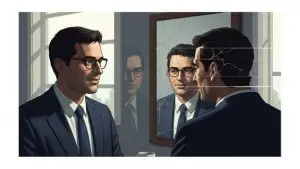

Everyone knows that smoking causes cancer. The information is available. The studies have been done. The warnings are printed on every pack. And yet millions of people still light up every day. This gap between what people know and what people do tells us something about the difference between knowledge and awareness.
Knowledge lives in the head. Awareness lives in the body. Knowledge is information stored. Awareness is information felt. And these two things operate on entirely different levels of human experience.
The Library in Your Head
Think about everything you know. Facts about history. Information about health. Data about how the world works. All of it sits somewhere in your memory, available to be retrieved when needed. This is knowledge. It is useful. It helps you pass tests and answer questions and sound informed at dinner parties.
But knowledge by itself does not change behavior. You can know that exercise is good for you and still spend every evening on the couch. You can know that processed food damages your body and still reach for it when stressed. You can know that your patterns are hurting you and still repeat them anyway.
This is not a failure of intelligence. It is a demonstration of how knowledge works. Information in the head remains abstract until something makes it real. And that something is awareness.
When Information Becomes Experience
Awareness happens when knowledge drops from the head into the rest of you. When you do not just know something but actually feel it. When the information stops being a fact you can recite and becomes a reality you cannot ignore.
A person might know they have a tendency to get defensive in arguments. They can describe the pattern. They can explain why it happens. But until they become aware of the defensiveness as it arises, in real time, in their body, the knowledge does not help them. They will continue to react the same way.
Awareness creates a pause. It introduces space between stimulus and response. When you are aware of something as it happens, you have a choice. When you only know about it after the fact, you have already reacted.
The Gap Where Change Happens
This pause, this gap, is where all change becomes possible. Without it, you are running on automatic. The patterns that formed in childhood continue to run the show. The reactions programmed into you by experience play out without interference. Knowledge sits in the background, unused.
With awareness, options appear. You notice the anger rising before it erupts. You catch the impulse to avoid before you have already avoided. You see the story you tell yourself as a story rather than as truth. And in that seeing, something shifts.
Why Knowledge Alone Keeps Failing You
The self-help industry is built largely on knowledge transfer. Read this book. Learn these principles. Understand these concepts. And yet most people who read self-help books do not fundamentally change. They accumulate information without any real shift in how they live. They add to the library in their head without altering the patterns in their life.
This is not because the information is wrong. Much of it is quite good. It fails because information alone cannot override the momentum of habit. It cannot interrupt patterns that operate below the level of thought. It cannot create the pause that makes choice possible.
Someone might read a hundred books about relationships and still repeat the same dynamics with every partner. The knowledge is there. The concepts are there. What is missing is the moment-to-moment awareness that would allow them to do something different when the pattern starts to play out.
Cultivating What Cannot Be Taught
Awareness is strange in that it cannot be given to someone. You cannot read awareness into yourself the way you can read information. It develops through practice, through attention, through the willingness to watch what is actually happening rather than what you think should be happening.
This is why practices like meditation exist. Not to fill the mind with more content, but to train the capacity to notice. To catch thoughts before they become reactions. To see emotions as they form rather than after they have taken over.
The development of awareness is less like learning and more like strengthening a muscle. It requires repetition. It requires showing up even when nothing seems to be happening. It requires patience with a process that does not move on the timeline of acquiring information.
Living the Difference
People who have developed awareness describe the experience differently than those who have only accumulated knowledge. There is a quality of presence to them. They seem less reactive. They catch themselves in patterns rather than discovering them in hindsight.
This does not mean they never make mistakes or that they have transcended all their conditioning. It means they have developed the capacity to see themselves in action. And that seeing, that awareness, gives them something that knowledge alone cannot provide: the ability to choose.
Knowledge tells you what you should do. Awareness shows you what you are actually doing. The gap between these two is where most human struggle lives. Closing that gap is not a matter of reading more. It is a matter of paying attention differently.
You already have access to this capacity. It does not need to be imported from somewhere else. Every time you catch yourself in a reaction, every time you notice a thought as a thought rather than as reality, you are exercising awareness. The question is how often this happens. And that frequency can be trained.
Start with small things. Notice the sensation in your body when you feel irritation. Observe the thought that appears just before you reach for a distraction. Pay attention to what triggers defensiveness when you are talking with someone. These moments of noticing are awareness in action. They do not require special circumstances or retreat from life. They happen right where you are, in the middle of whatever you are doing.